
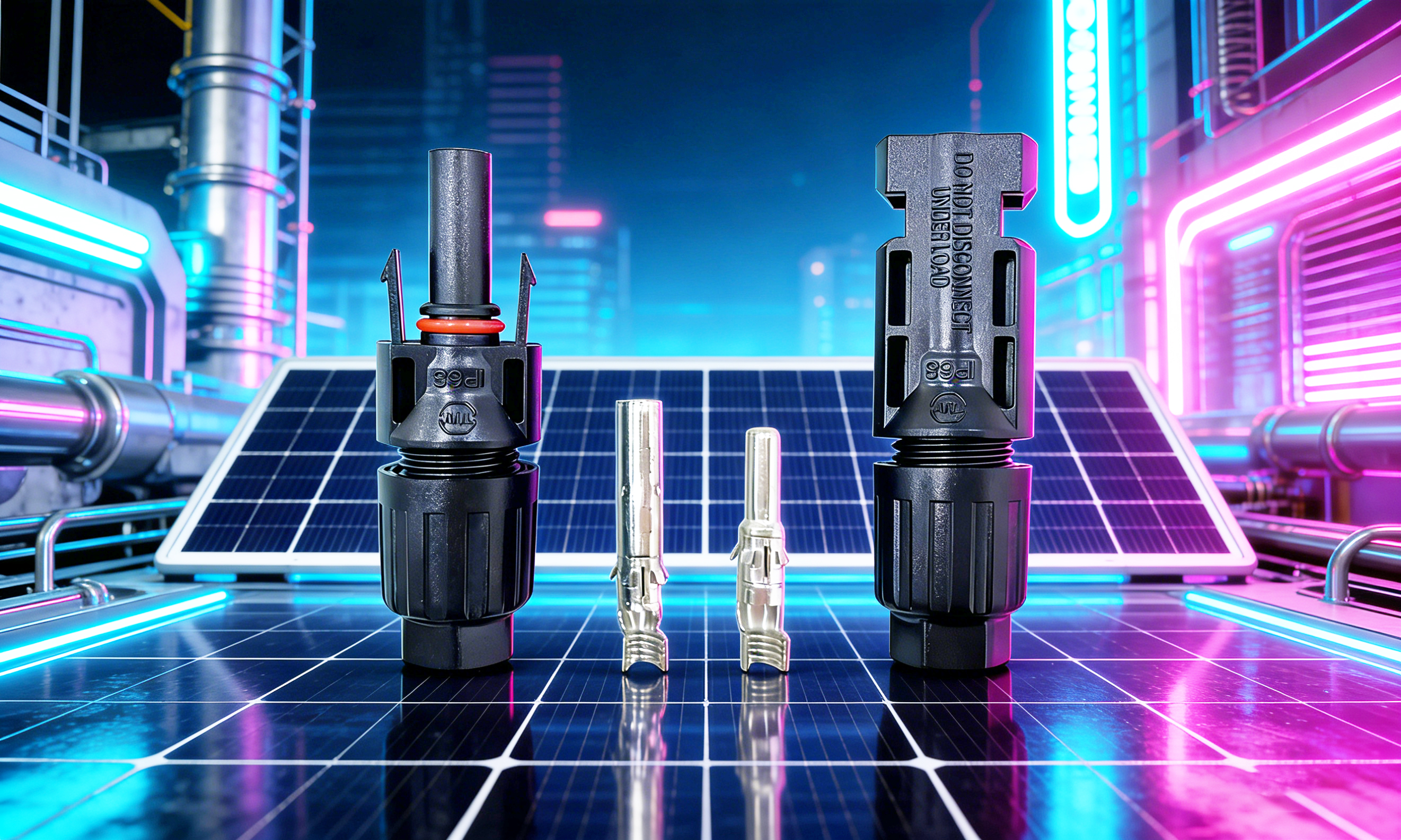
In the grand blueprint of a photovoltaic power station or the sophisticated design of a residential PV system, PV connectors are often one of the most inconspicuous yet crucial components. Like joints and bridges in a precision network, they silently link every PV module, enabling the efficient transmission of clean energy. However, improper selection of these 'small components' can lead to efficiency loss, operational failures, and even fire risks. How to choose a pair of safe and reliable 'shoes' for your PV system to ensure it runs steadily on the path of power generation for a long time? This article will systematically sort out the core points for selecting PV connectors for you.
The main function of PV connectors is to achieve fast and safe electrical connection between modules, and between modules and inverters. Their importance is reflected in:
Safety Cornerstone: Directly related to the electrical safety of the system, inferior or aging connectors are one of the main causes of DC arcing, overheating and fire.
Efficiency Throat: The contact resistance at the connection directly affects line loss and is related to the overall power generation efficiency of the system.
Reliability Guarantee: It needs to work stably for more than 25 years in harsh outdoor environments (ultraviolet rays, high and low temperatures, wind and rain, corrosion) to match the service life of modules.
Operation and Maintenance Convenience: Affects the efficiency of installation and the convenience of later inspection and maintenance.
Faced with a variety of brands and models on the market, you can screen them according to the following standards:
1. Electrical Performance and Safety Certification
Rated Voltage and Current: Must be selected according to the maximum operating voltage and current of the system with an appropriate margin. Common rated currents are 20A, 30A, etc., and higher power modules require corresponding higher specifications.
Contact Resistance: Requires extremely low resistance (usually <0.5mΩ) and long-term stability, which is the key to reducing power loss.
Safety Certification: Be sure to choose products that have passed authoritative international certifications, such as TUV (German Rheinland) certification, UL (Underwriters Laboratories) certification. These certifications strictly test electrical safety, weather resistance, fire rating (such as UL94 V-0), etc., which are the basic guarantee of safety.
2. Mechanical Performance and Connection Reliability
Insertion/Extraction Force and Connection Feel: Excellent design should ensure tight connection (low contact resistance) while having moderate insertion/extraction force and clear engagement feel and sound to prevent poor contact or accidental disconnection.
Locking and Protection Mechanism: A reliable locking structure (such as buckle, thread) can prevent accidental falling off. High protection level (at least IP67, which means no water ingress when short-term immersed in 1 meter of water; IP68 is recommended for harsh outdoor environments) is the key to dust and water proofing.
Resistance to Mechanical Stress: The shell should be sturdy and able to withstand pulling, twisting during installation and long-term wind vibration and other stresses.
3. Material and Environmental Durability
Shell Material: Must use high-quality engineering plastics, such as PPO, PA. It should have excellent UV aging resistance, high and low temperature resistance (common range from -40℃ to +120℃), flame retardant performance.
Contacts and Metal Parts: Current-carrying contacts should use materials with high conductivity and low oxidation rate, such as silver-plated copper. Spring parts need to resist stress relaxation to ensure long-term contact pressure.
Cable Adaptation and Sealing: The quality of supporting cable crimping tools and sealing rings (O-rings) is also crucial to ensure long-term sealing and waterproofing at the interface.
4. System Matching and Compatibility Warning
Strictly prohibit mixing different brands/models! This is an iron rule in the industry. Even if the appearance is similar, connectors of different brands (such as MC4 and MC4 compatible brands) may have differences in size, tolerance and material, and mixing is very likely to cause poor contact, overheating, and even fire. The same brand and model should be used in the same power station.
Pre-installed Connectors on Modules: When purchasing modules, it is necessary to clarify the brand and model of the pre-installed connectors, and the connectors and wiring tools used for subsequent expansion must be completely matched with them.
5. Brand and Long-term Reliability
Choose mainstream brands: Such as Staubli's MC4 series (original), Amphenol, TE Connectivity, leading domestic brands, etc. They have passed the test of massive installations worldwide and long-term time, with mature technology and stable supply chain.
Beware of low-price traps: There are a large number of counterfeit or inferior connectors on the market, whose materials and craftsmanship do not meet the standards. They are prone to aging, brittle cracking, sharp rise in resistance and other problems in a short time, with huge potential safety hazards.
6. Installation and Maintenance Convenience
Convenient installation tools: Whether to provide special and reliable crimping tools is crucial to ensuring installation quality.
Maintainable design: Some designs support on-site replacement of contacts or sealing rings for easy later maintenance.
Visual indication: Some products have connection status indicator windows for quick inspection.
Clarify System Parameters: Confirm the maximum voltage, current of the system, and the deployment environmental conditions.
Determine Compatibility: If it is for supplementing an existing system, it is necessary to find out the brand and model of the original connectors and insist on matching the same brand. For a new system, it is recommended to initially select from mainstream brands.
Verify Certification and Specifications: Request product specifications, focusing on verifying electrical parameters, protection level, material description and TUV/UL and other certification certificates.
Evaluate Suppliers: Choose formal authorized dealers or reliable channels to ensure genuine products and technical support.
Tools and Training: Equip with corresponding professional installation tools (such as crimping pliers), and conduct standardized training for installers to ensure correct installation techniques.
PV connectors, though small, are of great importance. Their selection is by no means a simple purchase of accessories, but a systematic engineering decision related to the safety, income and reliability of the PV power station throughout its life cycle. Abandon the 'almost' mentality, adhere to the principles of complete certification, reliable brand, strict matching and standardized installation, and lay a solid and reliable connection foundation for your PV system. Let every kilowatt-hour of clean electricity flow safely and efficiently into the power grid through these precise 'joints', lighting up a sustainable future.

 telephone
 Contact US