
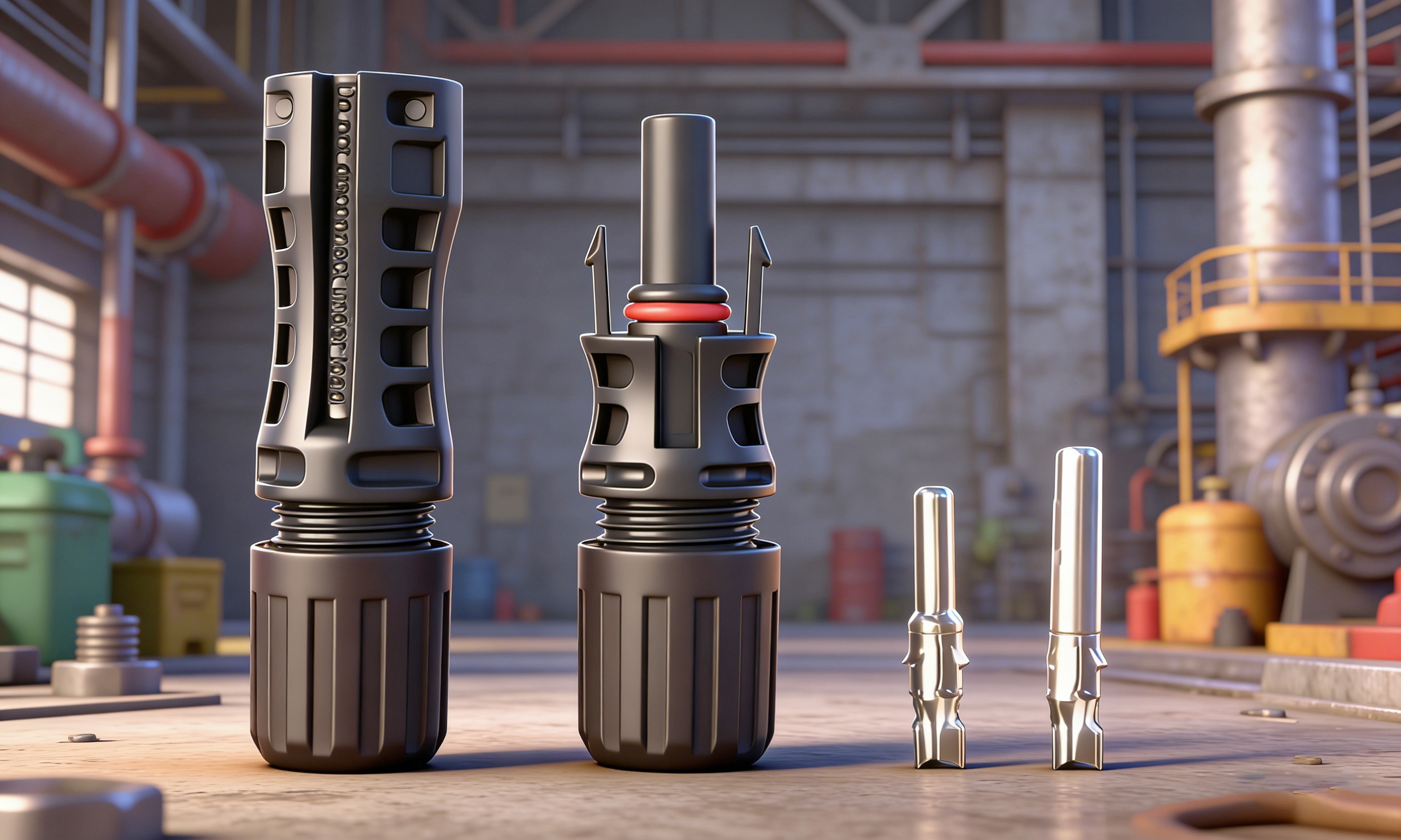
In solar photovoltaic systems, connectors are key components that ensure efficient and safe transmission of electrical energy. Careful selection is only the first step, while long-term reliable operation depends on systematic and scientific maintenance. A set of photovoltaic connectors lacking maintenance, like precision gears without proper upkeep, may gradually become a 'funnel' for system efficiency and a 'hidden danger' for safety. This article will systematically elaborate on the core maintenance points of photovoltaic connectors after they are put into use.
Regular visual inspection is the most basic and crucial maintenance measure. It is recommended to conduct a comprehensive inspection at least once every six months, and add additional inspections after severe weather (such as sandstorms, hail, typhoons).
Check Physical Condition:
Housing Integrity:Observe whether the connector housing (male and female ends) has cracks, deformation, fading (especially whitening or chalking) or ablation marks. Inferior materials or long-term UV exposure can cause plastic embrittlement.
Sealing Performance:Check if the rubber sealing ring is intact, without falling off, aging hardening or loss of elasticity. Seal failure is a common cause of water and dust ingress, leading to corrosion and short circuits.
Locking Device:Ensure that the connector's lock, slot or threaded locking mechanism is intact and fully locked, without loosening or damage.
Check Electrical Connection Points:
Overheating Signs:Carefully observe the connector and the insulation layer of the nearby cables for darkening, blistering, melting or charring marks, which are obvious signs of overheating caused by poor contact.
Corrosion Signs:Check for green or white corrosion deposits on metal contact areas (if possible) or interfaces, especially in humid, coastal or industrially polluted areas.
When abnormalities are found during visual inspection, or as part of preventive maintenance, professional testing is required.
Infrared Thermal Imaging Detection:
This is the most effective non-contact diagnostic tool. Scan all connectors with a thermal imager when the system is running at full load (on sunny days).
Judgment Criteria:The temperature of a normal connector should be slightly higher than the ambient temperature, and the temperature of connectors in the same string should be uniform. Any connector with local abnormal hot spots (usually more than 20℃ higher than adjacent connectors) must be immediately marked and handled, which is a direct sign of potential failure.
Electrical Parameter Measurement:
Under the premise of system power-off and operation by professional personnel, a micro-ohmmeter can be used to measure the contact resistance of key connection points. An abnormal increase in resistance value (for example, more than 1.5 times the initial value or that of similar connectors) indicates that the contact surface has oxidized or loosened.
Combined with string current and voltage monitoring data, if the performance of a certain string is continuously abnormally low, after eliminating component problems, the connector should be focused on for investigation.
Standardized Cleaning:
Power-off Operation:Before any cleaning and maintenance, safety procedures must be followed to completely power off the system.
Cleaning Method:Wipe dust off the housing with a dry soft cloth. For stubborn stains, wipe with a cloth dipped in clean water. Never use organic solvents or corrosive cleaners to avoid damaging plastics and sealing rings.
Taboos:It is strictly forbidden to rinse connectors with water while the system is running, as it poses an extremely high risk of electric shock or short circuit.
Handling Common Faults:
Loosening Found:Immediately power off, then re-plug and ensure it is fully locked in place. If the locking mechanism is damaged, the entire connector must be replaced.
Overheating or Damage Found:Never simply fasten or wrap with insulating tape as a temporary fix. Faulty connectors must be replaced by professional personnel. When replacing, use matching connectors of the same brand and model and special crimping tools to ensure that cable stripping length, crimping quality and waterproof sealing treatment comply with factory standards.
Aging Sealing Ring:If the connector design permits, replace the sealing ring with the original factory one. Otherwise, consider replacing the entire connector.
Record Maintenance History:Establish a connector maintenance log to record the date of each inspection, problems found, treatment measures and replacement parts information for easy tracking and analysis.
Spare Parts Management:Stock a small amount of genuine connectors and special installation tools that are completely matched with the original system for emergency replacement.
The maintenance of photovoltaic connectors is by no means a trivial matter, and it follows a clear core logic:
Prevention First:Eliminate faults in the bud through regular inspections and infrared detection.
Safety First:Always power off before any operation, and ensure it is carried out by qualified personnel.
Standardization as the Basis:Cleaning, replacement and other operations must strictly comply with product specifications and electrical safety standards.
Professionalism as the Key:Operations involving opening the cover, crimping, replacement, etc., must use correct tools and ensure professional techniques.
Compatibility as an Iron Rule:Strictly prohibit mixing connectors of different brands or models.
The long-term reliable operation of photovoltaic connectors is the micro cornerstone for ensuring the safety and revenue of power stations over their 25-year-plus life cycle. A systematic and preventive scientific maintenance plan is far more valuable than the connectors themselves. It safeguards not only the smooth flow of electric current but also the safety and return on investment of the entire photovoltaic asset. Institutionalizing and standardizing maintenance work can ensure that these 'energy joints' remain healthy and robust, allowing clean electricity to be injected into the power grid continuously and stably.

 telephone
 Contact US